Feb
17

We get this question quite often. Where is our office? Our headquarters’ address is in the Washington, D.C. area. Specifically, we are incorporated in the State of Maryland as a nonprofit organization with an address just outside of Washington, D.C. proper (literally, just a few hundred meters from the District border). For those of you familiar with Washington, you will know that most of the D.C. area is actually in Maryland and Virginia.

We also get asked if we are a U.S.-focused organization? No is the easy answer. The Institute was established to serve a global community and have a global presence. Our faculty and staff are located in several countries, with the largest numbers actually residing in Canada and the Philippines, not in the United States.

So far, I don’t expect this story to be of much interest, but there is an element of our operations that I believe is noteworthy.

We put a lot of thought into the design of the GHG Management Institute as a 21st century organization. Indeed, we take the challenge for companies and other organizations to reduce the carbon footprint of their operations very seriously. So much so, in fact, that while setting up the Institute we decided to do what so many talk about, but so few organizations actually do. We created a virtual organization, thereby eliminating commuting emissions and inefficient use of building space. We focused on finding the best experts in the world, regardless of their location. We invested heavily in information technology infrastructure rather than bricks and mortar (and continue to do so). We minimize our travel, and therefore travel related emissions, to the greatest extent possible. You may wonder why you rarely see us at conferences or other events. This is not by accident. We are not against travel, but insist that it be necessary travel.

We hope to serve as a model for what an organization can be if it takes the need to reduce its emissions seriously and is willing to innovate and experiment.

And because we are heavily relying on information technology tools to build a new global professional community, we believe that the best way to explore what works is to first try it out on ourselves.

We are eager to hear your thoughts on how the organizations of the future should be structured to meet the challenge of climate change and what your organization is doing in this regard.

Feb
10

Now that we have the Copenhagen Accord, which gives us some hope that eventually we will have a treaty that includes the United States and active engagement from developing countries, it seems like a good time to open our history books and look at some lessons from the Kyoto Protocol.

Many consider the Kyoto Protocol a total failure. While it is correct to see the Protocol as not achieving much of what was hoped for, accentuating what it has failed to achieve is narrow and wrongheaded. Indeed, Kyoto has accomplished a great deal in terms of constructing a global carbon market and an international regulatory structure. One issue, though, that has yet to be tested under the Protocol is the challenge of compliance and enforcement.

The constraints that national sovereignty places on multilateral environmental agreements (MEAs), such as the Kyoto Protocol, create problems for compliance systems. Compliance can be disaggregated into four components: monitoring, compliance determination, enforcement, and dispute resolution.

Monitoring relates to how an agreement provides for the collection and dissemination of information on relevant activities of parties. The relevant activities are those related to a party’s commitments. Most states will insist that they self-report information. Ensuring the credibility of self-reported information is a central concern for any MEA. Because information is always associated with some uncertainty, a process for compliance determination is required. Once a party is found noncompliant, an enforcement mechanism is needed to coerce compliant behavior. A dispute resolution process allows a party to appeal a determination of non-compliance before enforcement action is taken. The Protocol addresses all of these components, but like most MEAs, fails to overcome the fundamental problem of enforcement.

Monitoring of Annex I parties’ mitigation commitments under the Kyoto Protocol is centered on annual submissions of national reports. These reports “inventory” the party’s anthropogenic emissions from sources and removals from sinks of greenhouse gases. The parties to the UNFCCC and the Kyoto Protocol have agreed to guidelines laying out the requirements for these inventory submissions. The IPCC has also elaborated detailed technical guidelines on best practices and minimum standards for inventories. Inventory reports are prepared by some combination of experts from government, industry, consulting firms, research institutes, and academia, although final submission is the responsibility of the government.

Although developing countries (non-Annex I) have no mitigation commitments under the Kyoto Protocol, they must still meet strict monitoring requirements for Clean Development Mechanism (CDM) emission reduction projects. The guidelines for monitoring under CDM rely on a “case law” approach in which project developers, with approval of their host party, submit proposed methods for crediting mitigation projects.

Under the Kyoto Protocol, the determination of compliance for Annex I parties occurs in several stages. Each party’s submission is checked by the Protocol’s secretariat as to whether it meets minimum standards of completeness. Teams drawn from a pool of trained and certified experts that have been nominated by parties to the Protocol then review the submission. The Protocol includes an incentive for submitting high quality inventory reports. The expert review teams can recommend that “conservative adjustments” be applied to specific estimates in a submission that are judged to be of insufficient quality. (Note, that the GHG Management Institute delivers this training for the UNFCCC and Kyoto Protocol secretariat. The UNFCCC training program is based on a series of e-learning courses of which I lead the development.)

A party can then either accept the review team’s adjustment or it can appeal it to a Compliance Committee. This committee is made up of two branches: the Facilitative Branch and the Enforcement Branch. The Facilitative Branch monitors parties’ progress towards meeting their commitments and warns other parties of cases of potential non-compliance. The Enforcement Branch makes final determinations on the application of adjustments to a party’s national inventory.

Expert review teams also pass judgment on the capacity of the party—through its “national system”—to produce credible annual inventory submissions prior to the start of the commitment period in 2008 (although no procedure exists for how to handle parties that fail this test, Article 5.1).

The final determination of a party’s compliance is simply a matter of comparing its adjusted inventory totals for the commitment period (2008 through 2012) to its holdings of allowances (i.e., AAUs, CERs, ERU, and RMUs).

One of the failures of the Kyoto Protocol is its lack of any real enforcement mechanism. Although the Compliance Committee includes an Enforcement Branch, this branch actually has no power of sanction or coercion over noncompliant parties. If a party is found to be noncompliant, its eligibility to continue to participate in the Protocol’s flexibility mechanisms (i.e., national emissions trading, CDM, and JI) can be suspended by denying the party access to the international emission allowance transaction registry.

The parties to the Protocol have also agreed that any party that has insufficient allowances must surrender in a second commitment period 1.3 tons for each ton it exceeds its allowance holdings. The effectiveness of this provision, though, is limited by the fact that reduction targets for a second commitment period have not been negotiated.

Parties may appeal decisions of the Enforcement Branch to the full meeting of the parties of the Protocol, which can override a decision with a three-fourths vote.

A similar process exists for determining compliance, enforcement, and dispute resolution under the CDM through the CDM Executive Board and its Accreditation and Methodology Panels. However, the CDM also enlists the private sector to a significant degree for the work of ex ante approval of emission reduction project proposals (i.e., validation) and the ex post evaluation of actual emission reductions achieved before credits are awarded (i.e., verification).

The compliance system under the Kyoto Protocol has yet to be tested. However, even if all components work as expected, the options for enforcement are minimal. Unfortunately, there are no obvious solutions to the enforcement problem with an MEA addressing greenhouse gas emissions.

So, what does this mean for the future of the Copenhagen Accord? Since we don’t have a world government to enforce international law, the people of representative governments around the world must make it politically unacceptable for their governments to fail to comply with their treaty commitments and, equally important, they must make it politically unacceptable for their governments to look the other way while other countries fail to comply.

For the GHG Management Institute, we have to make sure that the professional capacity and other infrastructure for measurement, reporting and verification of GHG emissions exists throughout the world so that compliance is feasible.

Jan
27

In the climate change policy world there is plenty of talk about capacity building, especially for developing countries — though occasionally for developed countries as well. Less frequently, however, is what is meant by “capacity building” specified. The concept comes from the broader field of international development. The United Nations Development Programme defines it as:

Capacity building: the creation of an enabling environment with appropriate policy and legal frameworks, institutional development, including community participation (of women in particular), human resources development and strengthening of managerial systems, [recognizing] that capacity building is a long-term, continuing process, in which all stakeholders participate (ministries, local authorities, non-governmental organizations and water user groups, professional associations, academics and others).

But, even here we are left with only a vague concept that relates to community, human capital and institution building activities.

I have spent a good portion of my career, as have several others here at the GHG Management Institute, undertaking international capacity building work around the world on GHG issues. This experience has, in large part, shaped how we have set up the Institute.

Many climate change-related capacity building efforts adhere to the following model:

• Hire a consultant.

• Set up a workshop in the capital of a developing country at a western style hotel.

• Send an invitation to senior government, and maybe NGO representatives to attend.

• Fly the consultant and attendees from around the world or region in for a one to four day workshop.

The consultant spends several days flipping through PowerPoint slides on a screen and talking. The workshop closes, everyone goes home and that is the end of it. There is often little follow up after the workshop.

In addition to receiving training, a large incentive for many developing country representatives to attend these training workshops is that they receive a Daily Subsistence Allowance (DSA).  For government employees in many countries, this DSA money can represent a significant fraction of their salary. Additionally, going to fancy international meetings is a prestigious honor back at home. The point here is that the incentives are not necessarily there for government ministries and NGOs to send the right people to the workshop — those that can really use and implement the skills gleaned from the training.

Here at the Institute we take a different approach to capacity building. Focusing on the process of professionalization and the establishment of associated community norms, we take a more systemic approach. We strongly believe that professions — like law, accounting, engineering, medicine, etc.—have had a powerful influence on economic and social development. An emphasis on professional competency, quality, and ethical behavior provides the kind of social infrastructure that make it possible for larger things to happen that the broader society would otherwise not have confidence in doing. This point is especially relevant where the issue involves a public collective action problem, like addressing GHG emissions.

Building a professional community is a challenging project for anyone. Doing so both globally and quickly is even more difficult. Luckily, we have new communication tools to help facilitate the process and create the kind of infrastructure for training, community networking and norm setting, standards development, and professional certification that our parents could only have dreamed of. It is this infrastructure that the Institute is focused on building, in collaboration with partners around the world.

Our grassroots approach to capacity building is founded on centuries of human history. Professionalization is a powerful and enabling force. GHG measurement, reporting and verification will make up the foundation of nearly all climate change policies. But for society to have confidence in these metrics, they will have to be produced by personnel they trust. Right now we don’t have that trust, a shortcoming that must soon be rectified if we are to sufficiently scale climate change mitigation efforts. Our vision and solution to this trust gap is a community of professionals that support each other and police each other’s behavior.

Many of you may also have noticed that we charge for our training (although we provide generous financial aid and even full scholarships to many), while most other international capacity building initiatives provide training for free. We think this is an important difference. To develop the type of high quality training programs consistent with university degrees and other professional designations, it is essential to leverage resources beyond those that are available through international development funding.  It is also important for there to be a self selecting process for those that want to join this new community of GHG professionals. We want to have the correct people in the “room” that will be the experts and champions for the future of the profession. Ultimately, the profession must be viewed by society as earning their credentials in a credible manner.

I welcome your thoughts on how to best address the capacity building needs related to climate change and GHG management.


Jan
15

Why e-learning?

Inside the Institute Posted by Michael Gillenwater -2 Comments

Here at the Institute, we are consistently amazed at the number of people who blindly assume we deliver training in a standard classroom setting. Indeed one of the most common inquiries we receive is where and at what time we are offering classes. After more than two years of responding to such format questions, we have gotten pretty good at explaining the how and why of the online learning tools (i.e., e-learning) we utilize.

Many of you will have noticed our big announcement regarding the launch of ghgLIVE, a joint initiative with the organizers of Carbon TradeEx and Carbon Expo, to provide onsite training workshops on GHG management.

Yet our focus is and will continue to be heavily based on e-learning.  It is reasonable to ask us to justify this strategy. In a question: “Why favor e-learning over traditional in classroom learning?”

Our reasoning for e-learning delivery proceeds as follows:

  • Learners can proceed at their own pace, an approach that has been proven to maximize knowledge and skill acquisition;
  • The course is always “on,” minimizing the delivery challenges associated with the classroom;
  • The course can be taken “anytime, anywhere,” improving access for learners in all countries and locations;
  • The cost of training can be minimized without sacrificing quality; and
  • We can avoid the emissions associated with traveling and commuting while still providing global access to world-class instructors.

And outcomes? Are we sacrificing on quality to reach more people and avoid travel? Actually, reviews of learning effectiveness point to e-learning as not only being on par with classroom-based learning, but one of the most widely accepted studies on the matter concluded that e-learning was in fact more effective than face-to-face instruction:

“The meta-analysis found that, on average, students in online learning conditions performed better than those receiving face-to-face instruction”

- Evaluation of Evidence-Based Practices in Online Learning: A Meta-Analysis and Review of Online Learning Studies, U.S. Department of Education, 2009

This study found that superior outcomes for students engaging e-learning were explained by students tending to spend more time on online courses than the face-to-face equivalent course. And learners spent even more time, and did better, in blended courses, combining face-to-face and e-learning.

Our primary learning strategy is a blend of e-learning with experienced instructors and in-person workshops to practice and reinforce skills.  Due to the time and resources required to develop an e-learning course (we can definitely testify to this), more time is spent creating a course with strong pedagogy, which then leads to better quality instruction.

It is interesting to think about this study’s findings as they relate to the future of education more generally, especially university (post-secondary) education.  Could we do away with universities and put everything online?

Several schools are experimenting with online learning, including the program we partnered with at Harvard.  And there are even some totally online universities, such as Capella. But could universities go the way of travel agents and newspapers?

One company that is pushing this envelope is Straighterline, which provides online university level courses for typical subjects for just a flat rate of $99/month plus $39 per class.  Imagine a college education for a few hundred dollars per year.

Are these guys going to close down Princeton and Harvard.  No.  But mark my words: online learning will become a disruptive technology.  The next generation is increasingly comfortable doing almost everything online.  And with the internet, multimedia is beginning to deliver on its promises.  The economic pressures are too real to fend off forever.  Rich families will still go for the Ivy League brand.  But imagine it being possible for poor families in developing countries to afford a college education for their children.

Or imagine an entirely new professional community being trained and created globally in just a matter of years so that we can address the greatest environmental and social challenge of our time.

If we want to double and then triple the number of people around the world getting a college education (or exponentially grow the number of GHG management professionals around the world), how else can you imagine accomplishing this feat?

Other readings:

College for $99 a Month: The next generation of online education could be great for students—and catastrophic for universities. Washington Monthly, by Kevin Carey, September/October 2009.

A Virtual Revolution Is Brewing for Colleges. Washington Post, By Zephyr Teachout, Sunday, September 13, 2009.

Dec
27

As we close out this year, now is a good time for some refection before we charge into a new calendar. At the Institute, we have done just that, by releasing a report on our first two years of operation.

In founding the GHG Management Institute, we were inspired by looking into both the future and the past. For the future, we recognized that, despite short-term political volatility, addressing climate change will dominate our future and our children’s future. So, when we thought about what we could do to meet this challenge, we focused on thinking long-term and on core capacity needs.

To identify those needs, we looked to the past and asked ourselves how society has addressed other massive challenges. One of the reoccurring trends we saw was that when society faced a pervasive and difficult challenge, new professional classes often emerged to address them. The challenge of social justice saw the creation of lawyers, judges, and law enforcement. The challenge of funding government saw the creation of accountants (for paying taxes). The challenge of education saw the creation of teachers. And so on. The model of professionalization is pervasive throughout society. We decided this model needed to be replicated in the context of climate change. The only unique aspect of our challenge is that this process of professionalization needed to be done quickly and on a global scale.

In 2002 the foundations of the Institute began to be set. Finally, in 2007, the Greenhouse Gas Management Institute was launched as the only global institution of professional learning and development focused on the rigorous and serious issue managing the emissions that are the cause of global climate change.

We set up the Institute as a nonprofit organization because we recognized the need for a credible and independent forum for training and professional development. We believe performance metrics—for emissions, personnel, technologies, etc.—are the basis for addressing the challenge of climate change. In international negotiations we call the development of these metrics “monitoring, reporting, and verification” and “GHG inventories.” For corporations, we refer to “greenhouse gas accounting.” And in the offset project markets we speak in terms of “protocols, methodologies, and monitoring.” Underlying all of these policies, markets, regulations, programs, and standards are professionals that enable action to be taken over the long-term by managing (e.g., reducing) greenhouse gas (GHG) emissions and providing the essential information needed to track performance.

The Institute’s educational, membership, and professional programs are designed to support GHG professionals globally to fulfill this essential role. Greenhouse gas management professionals will be one of the major green job categories of the future because they will provide the foundation upon which climate change policies and carbon markets will be implemented and grow.

Our focus is narrow by design: on GHG management, accounting, and auditing. Research and educational institutions around the globe are training experts in economics, engineering, and atmospheric science. And business and management schools are developing programs in corporate sustainability. But the Institute is the only global educational institution focused on the techniques and real world practicalities of accounting, auditing, and managing for GHG emissions. As we increasingly take the issue of climate change seriously, the need and demand for experts with skills and knowledge in GHG management and accounting will exponentially outstrip supply. Our 2009 Greenhouse Gas and Climate Change Workforce Needs Assessment Survey clearly illustrated the trends in the emerging field of GHG management. Organizations and governments around the world are beginning to realize that measuring and tracking GHG emissions is the first step to thinking about how to manage the issue. If you cannot measure, you cannot manage.

The Institute is not only focused on training. We take the term “professional” seriously and mean to create, in collaboration with our partners, professional designations that are unquestionably credible. Being a professional means meeting ethical, competency, and practice standards. With this definition in mind and our vision of becoming a leading professional association, we have created the world’s first Code of Conduct for GHG management professionals.

Currently, because of the near complete absence of educational and professional development opportunities at traditional institutions such as universities, there is no clear career path into the field of GHG management. Therefore, a rigorous training, membership, and professional certification programs will provide aspiring experts a clear career path that will enhance our ability to address the human resource needs that will result as we scale up our efforts to address climate change.

We sincerely fear the specter of discredit that would fall upon the entire endeavor of meeting the challenge of climate change if GHG policies and markets were to experience scandals like those in the financial world. The numbers upon which we build climate change polices and carbon markets must be of the upmost credibility.

Our primary learning strategy is a blend of the best of e-learning and interaction with experienced instructors. E-learning is a highly-effective means of reaching out, educating, and bringing together people around the world. I’ll be talking more about this in a later blog post.

In summary, much of the last decade has not been dominated by pleasant events. Terrorism, financial collapse, and more than a decade has passed the Kyoto Protocol was negotiated. Yet we seem only marginally closer to dealing with the challenge of climate change in a globally coordinated fashion. But, we take the long view, and try and look beyond our short-term political set backs. Climate change is real, this we know. Eventually the world will come to accept this fact more fully and embrace more aggressive action. Our role is to be sure the professional capacity is there, ready act, when the call goes out.

GHG Management Institute Historical Timeline

1990

Intergovernmental Panel on Climate Change (IPCC) publishes first assessment report

1992

Earth Summit, United Nations Framework Convention on Climate Change (UNFCCC) negotiated

1994

The UNFCCC entered into force

1995

IPCC publishes second assessment report

1997

Kyoto Protocol negotiated

2001

IPCC publishes third assessment report

World Resources Institute (WRI) and the World Business Council for Sustainable Development (WBCSD) publishes initial GHG Protocol corporate accounting standard

2002

Training program launched by the UNFCCC for GHG inventory compliance expert review teams, developed and taught by future staff of GHG Management Institute

2004

Experts at ClimateCHECK develop training courses for GHG verification and GHG accounting based on ISO 14064 and GHG Protocol

2005

Kyoto Protocol entered into force

WRI/WBCSD GHG Protocol for Project Accounting published

2006

GHG Experts Network launched with funding by UNDP as a precursor to the GHG Management Institute

Clean Development Mechanism (CDM) begins operation

Early 2007

The leaders of ClimateCHECK, the GHG Experts Network, and GoVida e-Learning begin discussions on formation of a global training and professional institute for GHG experts. Earth Council Geneva with support the Swiss Development Cooperation Agency helps finance first training course.

2007

IPCC publishes fourth assessment report

June  2007

GHG Management Institute incorporated as a nonprofit organization

November

2007

GHG Management Institute publicly launched!

Carbon Disclosure Project signs partnership agreement with GHG Management Institute

Offset Quality Initiative (OQI) launched with the GHG Management Institute as a founding member

December

2007

World Resources Institute signs partnership agreement with GHG Management Institute

Summer

2008

GHG Management Institute selected by Regional Greenhouse Gas Initiative (RGGI) to develop accreditation and mandatory training program for verifiers

October

2008

GHG Management Institute partners with Point Carbon to develop global online training program on carbon markets.

November

2008

GHG Management Institute partners with World Bank to develop global training program on CDM and Joint Implementation (JI)

The UN’s Joint Implementation programme selects the GHG Management Institute to develop training program for verifier accreditation panels

January

2009

Regional Greenhouse Gas Initiative (RGGI) emissions cap-and-trade and emission offset programs launched

February

2009

GHG Management Institute and Sequence Staffing release 2009 Greenhouse Gas and Climate Change Workforce Needs Assessment Survey Report

March

2009

GHG Management Institute trains Standards Council of Canada assessors on ISO 14064 and 14065

Fall

2009

GHG Management Institute partners with Harvard University Extension School to teach graduate course in sustainability, GHG management and accounting.

November

2009

GHG Management Institute launches new global membership program and publishes its first biennial report.


Dec
23

It has taken this observer a few days (critically complemented by well overdue restful nights) to fairly assess the results of the Copenhagen fortnight. This delayed consideration is in part due to access, an issue I will raise first, not in order of importance, but due to the immediate impacts on my final days at the COP.

The UNFCCC Secretariat and COP host city have historically made Herculean efforts to ensure proceedings are transparent and accessible to all that have a legitimate stake in the process. Indeed the first week of COP15 was no exception to this admirable trend, even as Copenhagen’s Bella Center swelled under the strain of a record number of participants. However, burgeoning crowds of new arrivals in the COP’s second week confounded UNFCCC computer systems, strained already taxed logistics, and quickly exceeded the building’s occupancy limit. These capacity issues were further compounded as scores of high-level ministers and accompanying entourages streamed in for the latter week’s push. Finally, access went from difficult to impossible as security was heightened in the closing days of the COP to accommodate the almost 120 heads of state assembled to throw their weight behind the negotiations.

The sheer logistical challenge of accommodating so many eager participants marked an inflection point in the UNFCCC process in a number of respects, with COP15 representing the first significant limitation of access to civil society. While the organizers’ decision to pare down the ranks of admitted NGO observers from more than 10,000 to 7,000 and finally to just 300 sparked visceral outrage, an alternate emotionally-removed perspective would be right to note that these were not arbitrary restrictions and by many measures the action required to manage this heightened interest speaks to the ascendency of climate change from an obscure technical conversation to a top tier pressing issue of our day. Nevertheless, the fact that an unwieldy 45,000+ registered for the COP – an awkward number for any venue outside of a football stadium – inexorably leads to a conclusion that the UNFCCC COP process requires fundamental retooling.

Indeed, in the wake of spoiled expectations having very little to do with civil society’s harrumphing, some commentators are loudly arguing that the UNFCCC process is not just broken, but unfixable. Highlighting UN formality and decorum with specific reference to the fora’s fixation on unanimity and in turn the equal power it de facto grants nations large and small, these voices suggest diversity ultimately undermines expediency. Pointing to the limited number of participants (five named with 28 total signatories) in the summit’s vague but incrementally ambitious gesture towards an international agreement, the U.S. brokered Copenhagen Accord, the value of alternative venues for large emitters has again risen to the fore. In fact one such meeting has already been proposed by French President Nicholas Sarkozy in advance of the UNFCCC’s summer intersessional (tentatively the body’s next scheduled meeting).

Debate over the UNFCCC process will undoubtedly pick up in the New Year, but for now the preliminary noise being made on the topic provides an interesting backdrop for the subject of the part II of this post: the actual progress made at the COP.

Crowds at the Bella Center queue outside the COP in long lines, often for hours at a time. photo courtesy of: http://www.flickr.com/photos/aussmc/4187971144/


Dec
16

On Saturday evening the Institute had the distinct pleasure to co-host an official COP15 side event with the Business Council for Sustainable Development (BCSE) and the Carbon Disclosure Project (CDP).

The event, “Driving Low Carbon Investment,” drew a capacity crowd on the COP’s traditionally sleepy “changeover” day – a particularly impressive turnout given that the event happened to coincide with the commencement of the ever-popular Saturday evening NGO party.

The COP audience was treated to high-level presentations and insightful discussion on issues at the convergence of investment and measurement, monitoring, reporting, and verification (MRV), an impeccably topical conversation for the COP negotiations.

The event was kicked off by a short introduction from BCSE executive director Lisa Jacobson, and helmed by Richard Gledhill of PricewaterhouseCoopers.

The Institute’s Stelios Pesmajoglou began the evening’s presentations with an overview and projections on the role of MRV in the international process, highlighting key issues and challenges with a particular focus on the need for strengthened human capital and associated resources to achieve implementation.

Paul Simpson, CDP’s COO, then provided a corporate context, tying in his organization’s experience in providing an outlet for voluntary reporting of carbon liabilities.

With the tone set for discussion, the presenters gave way to a diverse panel of respondents.

At the governmental level, Suresh Prabhu, Indian MP and former minister several times over, offered perspective from his rapidly industrializing native India.

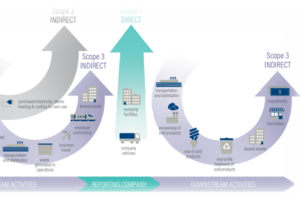
From the private sector, Karen Utt of U.S. consultancy Conservis spoke to her experience working on corporate inventories drawing specific attention to the challenges of accounting for Scope 3 emissions.

Looking at the other half of this equation, Institute Advisory Board member and Point Carbon Senior Advisor Einar Telnes, highlighted the importance of aligning training to reporting, citing the need for skill characteristics transcending financial auditing.

Finally, Nick Robins from HSBC took a step back and considered the role of MRV from the view of the investor community, drawing out the well-understood concept that there is a market failure in climate pricing, to further advise that there is a more fundamental and pressing market failure in climate data.

In sum, the event was both a success and a call to action. The evening’s engaging dialogue not only clearly outlined the importance of MRV in climate policy, but also served as a sharp reminder of the challenges implementation poses and the importance of integrating robust complementary professional capacity.

(Left to right) Richard Gledhill, PwC; Paul Simpson, CDP; Stelios Pesmajoglou, GHGMI

(Left to right) Einar Telnes, Point Carbon; Karen Utt, Conservis; Suresh Prabhu, Indian MP; Nick Robins, HSBC

Dec
14

As the first week came to a close at Copenhagen’s Bella Center, I took a moment to record a few impressions on the grueling COP process and an overview of some issues the Institute will be watching as the negotiations advance.

Dec
10

You know that the times are getting a little weird when Sarah Palin starts talking about historical reconstructions using proxy data of average global surface temperature (see her recent opinion piece in Washington Post).

I really should keep this blog focused on items that are more core to the mission of the GHG Management Institute, but I am compelled to comment briefly on the issue of the stolen emails from the research center at East Anglia University.  I am compelled because they are being used as a political weapon to discredit well-substantiated understanding of atmospheric science.

The U.S. EPA has finalized its endangerment finding under the Clean Air Act, which now clears the way for regulations of GHG emissions in the United States for vehicles and ultimately other sources.  Immediately the EPA was sued by the Competitive Enterprise Institute, in part based on what they see as a smoking gun within these stolen emails that they claim are evidence of climate change being a big hoax.

There are now multiple investigations in the works to determine if any improper actions were taken by the scientists whose emails were stolen. Although, I cannot say with certainty, my bet is that the only improper action that will be uncovered is the obvious one.  That by those who illegally stole personal emails from respected scientists.  Already, one of the scientists involved in the so-called “climate-gate” has received death threats and another climate scientist in Canada has had is office broken into.  This state of affairs is the sign of an anti-climate change policy movement that is so lacking in credibility that anything goes.

The truth is that there is almost no credible science behind the other side, which is why they have to fall back on twisting words in private emails out of context to try and manufacture a conspiracy.

Just imagine trying to get thousands of scientists, researchers and academics from around the world to maintain and coordinate a decades long conspiracy for manipulating research results.  Yeah, right!  Scientists could pull that off.  Science does not always get everything correct the first time, but it is not because of some conspiracy (see The Structure of Scientific Revolutions (1962), by Thomas Kuhn).

I am actually happy that CEI filed this lawsuit because now a judge can look at all the evidence behind climate change and pass judgment.  I am pretty confident about the conclusion.  And just like the judge that looked at intelligent design as an alternative to Darwinian evolution (see Kitzmiller v. Dover Area School District), another judge can expose the climate deniers as the pseudo science that they are.

If you want to look more deeply into the stolen emails, see a really useful investigation by the Pew Center on Global Climate Change.

Dec
9

Please join me in welcoming one of our alumni and members as guest blogger this week for Inside the Institute. Don Bain is a highly successful management consultant, software expert and professional engineer.  He recently participated in the stakeholders’ workshops at WRI on new draft standards and is guest posting on Inside the Institute to stimulate a conversation with our Membership.


Last week I was privileged to attend the last stakeholder workshop for review of the GHG Protocol Standard for Value Chain and Product Life Cycle accounting and reporting.  The workshop was hosted by WRI in Washington, D.C. and was the final workshop in a multi-national series to afford the opportunity for the stakeholders to provide in-person feedback on the draft standards.  Work on these standards kicked off in 2008 in response to needs assessed by a survey conducted by WRI and WBCSD and included GHG Management staff on multiple workgroups.  These standards follow the well-received and successful GHG Protocol Corporate Accounting and Reporting Standard and GHG Protocol for Project Accounting, published by WRI/WBCSD.


Here are the headlines:

  • over 100 people showed up and are engaged (my estimate)
  • many companies including IBM, Levis, Kraft, DuPont, Sun Microsystems and Unilever attended
  • a few NGOs, and a number of U.S. govt. agencies including EPA, Commerce and GSA attended
  • consultants, at least one accountant and a few software providers attended.
  • according to the WRI/WBCSD project team, over 50 companies have volunteered to “road-test” the new standards in 1Q & 2Q2010; remarkable
  • motivation  to participate is high and not just based on anticipated regulatory compliance requirements.

My observations:

The 2 standards are well-written, large relative to the previous standards (nearly 100 pages), and ambitious.  There was some ‘grumbling’ about the amount of work and data implied by some practitioners in the room, but this constructive tension seemed borne of a grasp of the personal effort that will be required and a tacit commitment to getting it done.  In fact, an informal poll in a break-out session as to whether the standards should proceed to road testing and implementation resulted in an overwhelming ‘Yes’  response.

There are a few gaps in the documents remaining to be completed, but none that would preclude proceeding to the road test and implementation phases.  There were many comments back to the standards project teams, constructively delivered and well received.

One group of comments particularly struck me.  These comments advocated closing potential loopholes in the draft language that might be exploited to avoid accounting for all emissions.  The consensus was to favor more rigorous standards language in hopes that the uptake and results would be of higher quality.  At first, this seems in paradox to the previously mentioned concern for the quantity of work involved, as tougher standards mean more effort.  But it makes sense.  People in that room were highly motivated, alpha adopters.  It is no surprise they want to demonstrate leadership.

In one of the breakout sessions, I polled the room informally, asking: “This supply chain standard depends upon suppliers and trading partners to provide quality data on their scope 1 and 2 emissions.  Do you feel they are in a position to do so?”  The prevailing consensus in the room was ‘No, not yet’ and ‘They still need our help.’  I further asked, “What percent of your suppliers are in a position to provide quality data?”  Only one person ventured a response:  “Maybe 20%.”

Reflecting on the workshop, it was a good investment of time.  I studied the standards beforehand, had some things to say and the GHG Protocol team listened. Moreover, I heard some great anecdotes from practitioners and met some excellent people — birds-of-a-feather so to speak.

The comment period for the draft standards is open until December 21, 2009.  I strongly urge practitioners to read the draft standards available here and submit comments via the comment templates provided on the same source page.

If you attended one of the workshops, I encourage you to weigh in on your experience via the comment section below.

Don M. Bain, P.E.