
We recently invited our 2025 alums to complete an anonymous survey about their training experience with GHGMI. Conducted annually since 2017, the Alumni Survey helps us understand what’s working well, where we can improve, and how GHG management training shapes alumni careers over time. And each year, we look forward to sharing the feedback with our greater community and implementing it as we can.
General Feedback
Along with answering multiple-choice questions about personal motivations for joining a GHGMI program and the training’s technical outcomes, participants shared thoughtful written feedback, including praise, suggestions, and constructive insights that’ll help us shape our offerings. Here are a couple of quotes we’d like to share with you that mimic quite a few others:
“The training I gained via the Greenhouse Gas Management Institute has proven beneficial with respect to my capacity to undertake a range of consultancy opportunities that run the gamut of climate change adaptation and mitigation efforts. Whether concerning methodological constructs, policy, MRV or assessments, as a result of my training, I possess the requisite skills and competencies to effectively, efficiently and accurately contribute to such efforts.”
“By way of the expert instruction and insight afforded me, in addition to providing a sound foundation, it also encouraged me to undertake further training involving climate change and environment-related topics. As a result, I fully attribute my improved acumen and subsequent increased marketability to the training I received courtesy of GHGMI.”
In a rapidly changing world, understanding how to manage GHG emissions and mitigate the impacts of climate change is a key issue, and training that builds a comprehensive understanding of the dynamics underpinning global warming is essential for delivering effective solutions. The insights alum share help us improve our training programs, which in turn strengthen our network of professionals committed to climate action.
“I’m delighted that our alumni have given back by sharing their insights with us. Our gratitude is reciprocal. Similar to the action they’ve taken within their climate work following training, their feedback is a meaningful piece of our own organizational learning – it equally helps us translate learning into action.” Molly White, GHGMI Director of Education
Survey Results
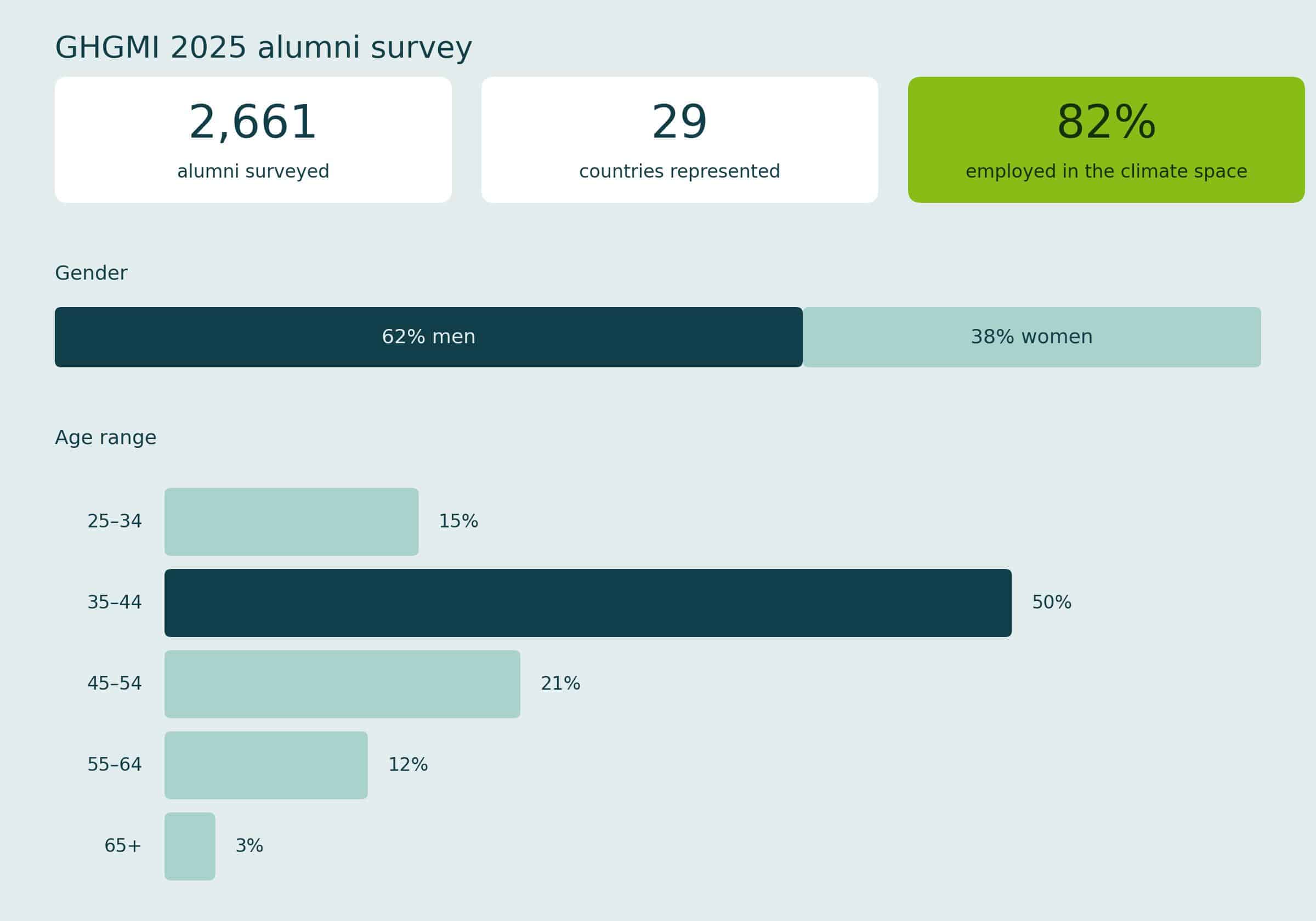
Why Alumni Choose GHGMI
Before deciding to become GHGMI students, survey participants said they valued the Institute’s specialized training offerings, chances to stay current with the latest GHG management news, and access to a trusted network of GHG professionals they can rely on.
When asked why they registered for online training, respondents cited reasons such as to account for emissions from or develop a GHG emissions inventory for their organization, to advance their knowledge of GHG management and increase their employability, to learn how to manage their organization’s emissions, or to supplement their current level of education or educational program. Their primary motivation for joining GHGMI online training was to build capacity within their current institution, ministry, or group to address climate change effectively.
The Training Experience
Ninety-four percent (94%) of respondents rated the overall learning experience as very good or excellent. Participants rated the accessibility of GHGMI online courses and the quality of the workshops positively on a scale of 1 to 5. They provided additional suggested areas for accessibility improvement (described below in the “Listening and Taking Action” section).
Putting Learning into Practice
The 2025 Alumni Survey points to the lasting impact of our GHG management training: 83% of those who responded to the 2025 survey are currently working in climate-related roles, and many contribute to governments’ decision-making on key GHG emissions areas such as measurement, reporting, and verification (MRV) systems, transparency, and energy.
The survey also found that 79% of respondents took on and/or conducted more climate mitigation or GHG management-related tasks after training with GHGMI, and nearly half (48%) reported managing emissions inventories or programs covering more than 100,000 metric tons of CO2e. These findings suggest that alums aren’t only applying the skills they gained through our programs but also demonstrating a strong commitment to professional competence and ethical standards in managing their GHG responsibilities in their respective areas of work.
Preparing the Future of Climate Action
When we asked about the impacts, achievements, and career outcomes that alums partly or fully attribute to their GHGMI training, respondents consistently reported meaningful improvements in their technical skills, which often led to greater confidence in their decisions and to being sought out by their peers.
“Since 2021, I’ve had a project to open an environmental consulting firm, but my qualifications weren’t strong enough to support this project. I didn’t have the resources or the time to go to university for a Master’s degree. I jumped at the chance offered by the Diploma in GHG MRV program to obtain a higher-quality qualification… I’m currently taking the necessary steps to open this firm to support carbon market mitigation projects, among other things.”
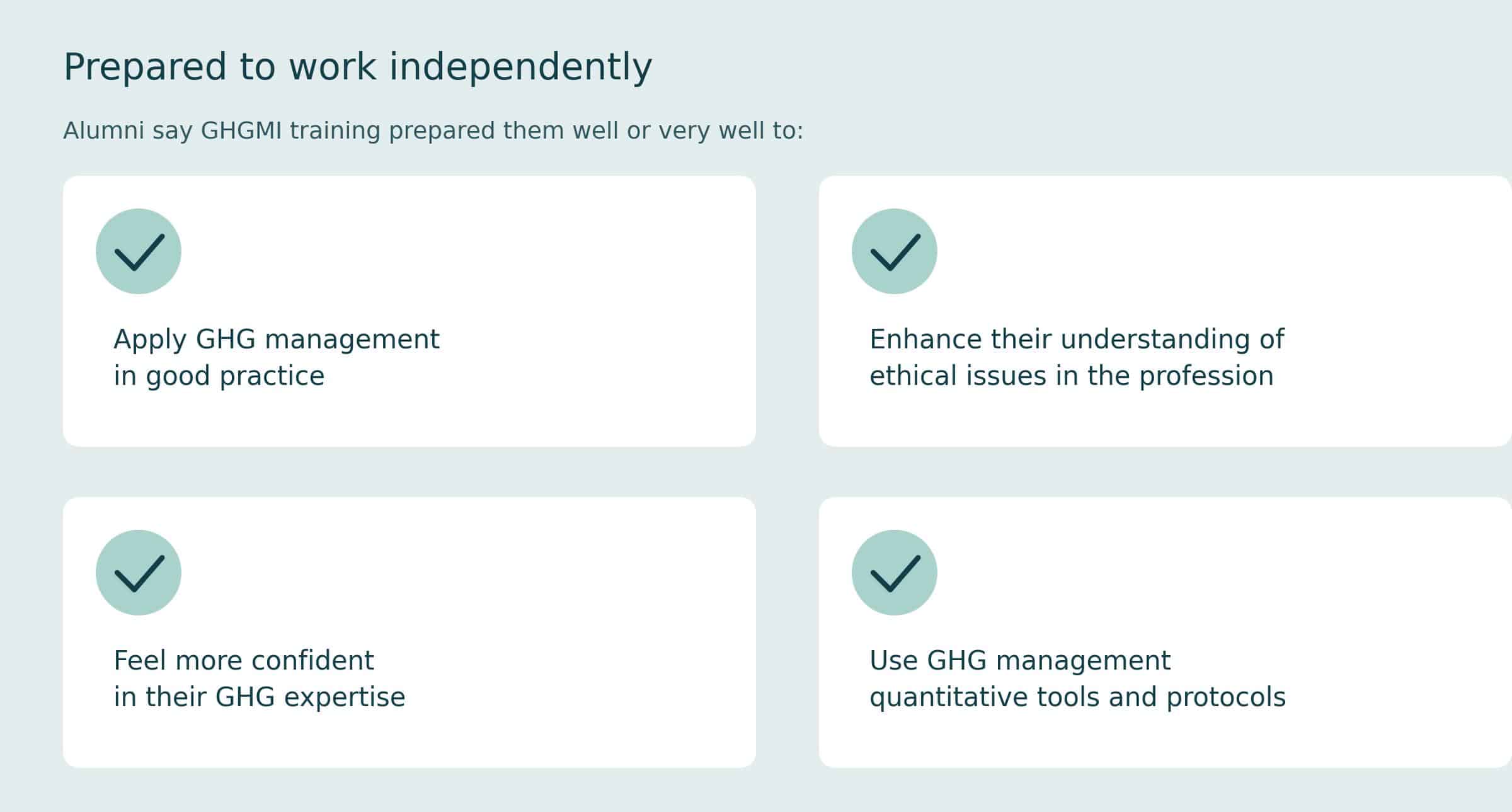
Our 2025 alumni are heading into the next decade feeling empowered by new technical skills to set ambitious goals and take on meaningful GHG management projects and initiatives: “In the next 10 years, we want to reduce greenhouse gas emissions by half.”
Distinguished Faculty and Alumni
The 2025 Distinguished Alumni and Faculty Achievement Awards, nominated by survey participants, will be announced in the coming months. Read more about previous distinguished alums here. And get to know our previous outstanding faculty here.
Listening and Taking Action
The annual Alumni Survey is more than a way to measure outcomes. We take your feedback seriously, and we use it to listen and improve. We’re grateful to alums who shared thoughtful suggestions on how we can make our programs even more impactful.
One area of focus is additional accessibility. GHGMI cultivates a multilingual network of instructors who deliver training worldwide, and we’re continuing to secure funding to translate online courses into additional languages. Our current course catalog includes programs in English, French, Spanish, and Portuguese.
Alums also encouraged us to explore new ways to enrich the learning experience through greater interactivity and expanded opportunities for mentorship and internships for GHGMI graduates. These insights will help inform the development of future programs.
Shaping What’s Next
The survey offered valuable insight into how our community likes to stay connected with the Institute. Participants chose the GHG Experts Forum, the GHGMI newsletter, and the GHGMI LinkedIn page as their preferred channels for staying informed, continuing to learn, exchanging knowledge, and engaging with GHGMI after completing their training.
Looking ahead, our 2025 alumni already have ideas about which training topics they’d like GHGMI to host next. Their responses span a range of areas, including GHG Inventory & Reporting, MRV & Transparency, Mitigation Strategy & Targets, Methodology & Data Quality, Finance, Community Engagement, Tools & Platforms, and Climate Risk Management. Our annual survey is now closed, but we welcome feedback from our community at any time as we continue refining and expanding our programs. You can contact us here.
Thank you to everyone who took the time to share your experiences, ideas, and aspirations. Your feedback is helping us build stronger training programs and a stronger global community of climate professionals.
Comments