
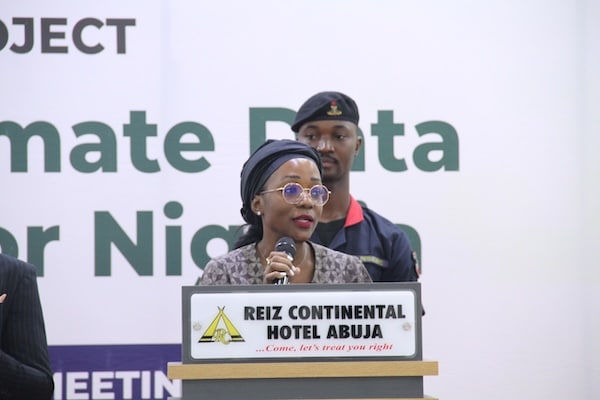
 Every major system has to start somewhere—not with software or spreadsheets, but with a shared understanding. That was the purpose of the Inception Workshop, “Building Robust Climate Data and MRV Systems for Nigeria,” held in Abuja on February 10, 2026, funded by Nigeria–UK PACT (Partnering for Accelerated Climate Transitions). The workshop marked the formal start of a national effort to strengthen how Nigeria measures, reports, and verifies climate action—before any tools are built or data is collected.
Though expected deliverables were discussed, too, the day was mostly centered around alignment: why this work matters, how it will be done, and who needs to be involved for it to last.
Why Begin with MRV?
Nigeria’s climate ambition is clear. Through its updated NDC 3.0 and long-term net-zero commitment, the country has laid out where it wants to go. What remains is the foundation that makes those commitments measurable and credible. Measurement, Reporting, and Verification (MRV) is the foundation. It connects climate policy to evidence, planning to outcomes, and national commitments to what is actually happening on the ground.
The inception workshop created space to discuss MRV not as a reporting obligation, but as a practical tool for better decision-making, accountability, and access to climate finance. During the goodwill messages, Folakemi Aletan, a representative from the UK PACT Nigeria Country Office, said it well:
“We must recognize that a robust MRV system is the nervous system—as I like to call it— of our climate response. Our need is clear. We must transition from a model of dependency to one of data sovereignty.”
Dr. Asmau Jibril, a representative from Nigeria’s Federal Ministry of Environment, followed up: “Nigeria’s commitment under the Paris Agreement depends heavily on the strength and reliability of our MRV system. Ambition cannot be measured, progress cannot be tracked, and climate finance cannot be effectively accessed without it.”
Setting the Ground Rules Early
It was imperative to clarify how this project would work from the outset. Led by Nigerian government officials, representatives of UK PACT (Partnering for Accelerated Climate Transitions), and the project technical team from GHGMI, CITEPA, and Forts & Agro Consorts Ltd., presentations and discussions emphasized principles that will guide implementation throughout the project lifecycle:
- Building on existing national systems rather than duplicating past efforts
- Co-creating tools and processes with Nigerian institutions
- Phased, practical delivery that allows learning and adjustment
- Clear coordination and governance across federal and state levels
This early clarity matters, as this project aims to avoid designing systems without enough institutional ownership or alignment.
“Building on existing initiatives is key,” said Matej Gasperic, Nigeria- UK PACT Project Director with GHGMI. “It’s one of the five pillars of our implementation strategy. We don’t want to duplicate work; we want to identify gaps and fill them. This will allow us to connect the dots between existing efforts and turn them into a functioning national MRV system.”
By addressing these issues at inception, the project aims to avoid common pitfalls and focus on long-term sustainability.
Why Subnational MRV Is Central from Day One
Although the project is national in scope, the workshop repeatedly returned to the role of states and local institutions. Decisions that affect climate actions and emissions occur locally, yet national systems often struggle to capture this reality.
The project is designed to acknowledge that challenge early by piloting MRV systems in selected states, using real data and troubleshooting with existing institutional processes. These pilots are not symbolic; they are meant to test feasibility, identify capacity needs, and inform how a scalable national system should function.
“Subnational MRV is essential,” said Dr. Yerima P. Tarfa, the Subnational Project Lead with the Nigeria-UK PACT project. “Most climate action occurs at the state and facility levels, and national GHG inventories depend on local data.”
The emphasis, again, is integration. Not parallel reporting systems, but clearer links between state-level action and national reporting.
Dr. Julien Vincent (CITEPA) reiterated this point: “To avoid discrepancies among states, we need harmonized estimation methods.”
More Than a Technical Exercise
While the work to build an MRV system is highly technical, the conversations in Abuja made clear that this work is also institutional and human. It depends on people understanding their roles, trusting the process, and seeing value in the system they are helping to perfect.
That’s why the project places such importance on capacity building, defined mandates, and governance mechanisms like the Project Steering Committee. These elements are being established early as essential building blocks.
A Beginning, Not a Conclusion
The inception workshop didn’t mark the completion of anything. Instead, it marked a starting point—bringing together institutions, partners, and technical experts to agree on direction before moving into design, training, and piloting.
In the months ahead, this shared understanding will shape how Nigeria’s climate data systems evolve. The conversations that began in Abuja will influence not just how emissions are counted, but how climate action is planned, tracked, and reliable.
Comments