
What remains less visible is the gap between those commitments and the day-to-day work of turning them into something concrete.
For many national teams, that gap is not about a lack of will. It’s about capacity. It’s about having the tools to model future emissions, the data to test different scenarios, and the technical expertise to translate policies into measurable outcomes through emissions modeling and climate action planning.
This is where much of the work is now focused, with growing attention to building the technical skills and systems that enable implementation.
Through the Initiative for Climate Action Transparency (ICAT), the Greenhouse Gas Management Institute (GHGMI) is working with countries to strengthen that capacity from within. A key part of this effort is hands-on training in the Greenhouse Gas Abatement Cost Model (GACMO), a tool that helps countries move from high-level targets to detailed planning.
A closer look: planning for NDC 3.0 in Chad
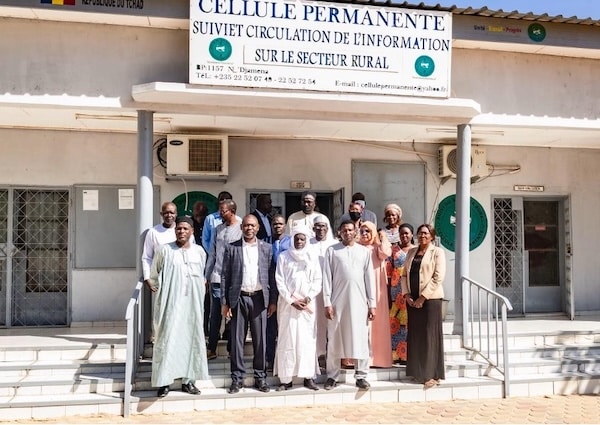
In Chad, this challenge is immediate. The country is preparing its next round of climate commitments—NDC 3.0—while also working to meet evolving transparency requirements under the Paris Agreement. That process depends on more than setting targets. It requires understanding how emissions may evolve, what mitigation options are available, and how those options compare in terms of impact and cost.
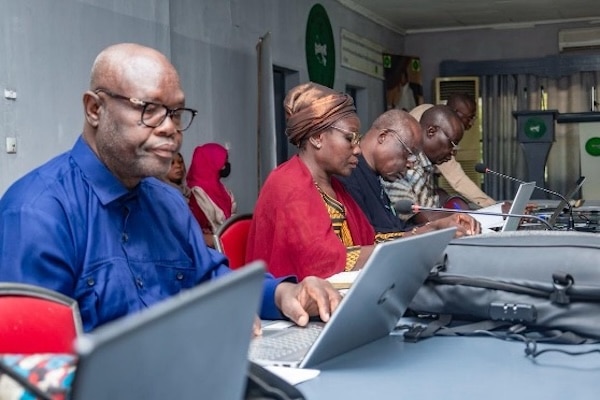
To support this work, national experts recently participated in a GACMO training focused on building those skills in a practical way. The training was delivered with technical support from various partners, including Julien Vincent of CITEPA, a member of the GHGMI consortium.
“Using their own national data, participants developed emissions scenarios, tested assumptions, and explored mitigation pathways across sectors such as energy, agriculture, and land use,” Julien explained.
The sessions brought together experts from multiple ministries, reflecting the reality that climate planning is not confined to a single institution. It requires coordination, shared data, and a common understanding of how different sectors contribute to national goals.
Building expertise that stays in-country 
For GHGMI and ICAT, the purpose of these trainings is not only to introduce a tool, but to support a longer-term shift in how this work is carried out.
“At its core, this is about climate action capacity building—ensuring that countries have the expertise to lead their own climate planning,” said Matej Gasperic, GHGMI’s Mitigation Program Director.
He continued, “In many cases, countries have relied on external support for technical analysis. While that can be useful in the short term, it does not always leave behind the capacity needed to continue the work independently.”
Building in-country expertise changes that dynamic. It allows national teams to run their own models, update their own data, and revisit their assumptions as conditions change.
This approach is reflected in similar efforts elsewhere. In Haiti, training has focused on strengthening institutional capacity to manage data, interpret results, and apply modeling outputs to national mitigation strategies. In the Democratic Republic of the Congo, stakeholders from different sectors have worked together to improve their ability to model emissions and support national planning processes. Across these contexts, the emphasis is consistent: building skills that remain within institutions and can be used over time.
From projections to policy choices
As countries develop their next generation of NDCs, the ability to analyze different pathways is becoming increasingly important. Tools like GACMO help make that possible. They allow countries to construct baseline scenarios, test the impact of policies, and compare options based on their effectiveness and cost.
This kind of analysis supports more informed decision-making. It helps answer practical questions about where to focus efforts, how to sequence actions, and how to align climate goals with broader development priorities.
Looking ahead
The work of implementing climate commitments is ongoing, and it continues to evolve as new data, tools, and requirements emerge. Through its partnership with ICAT, GHGMI is supporting countries in building the technical foundations needed to advance this work. That includes not only training, but ongoing engagement as countries apply these tools in their own contexts.
The process is gradual, but it reflects a broader shift toward sustained capacity building for climate action. As more national experts develop the skills to model emissions and assess mitigation options, countries are better equipped to shape their own pathways—grounded in data, informed by their priorities, and carried forward by their own institutions.
Learn more about GHGMI’s work with ICAT
Comments