
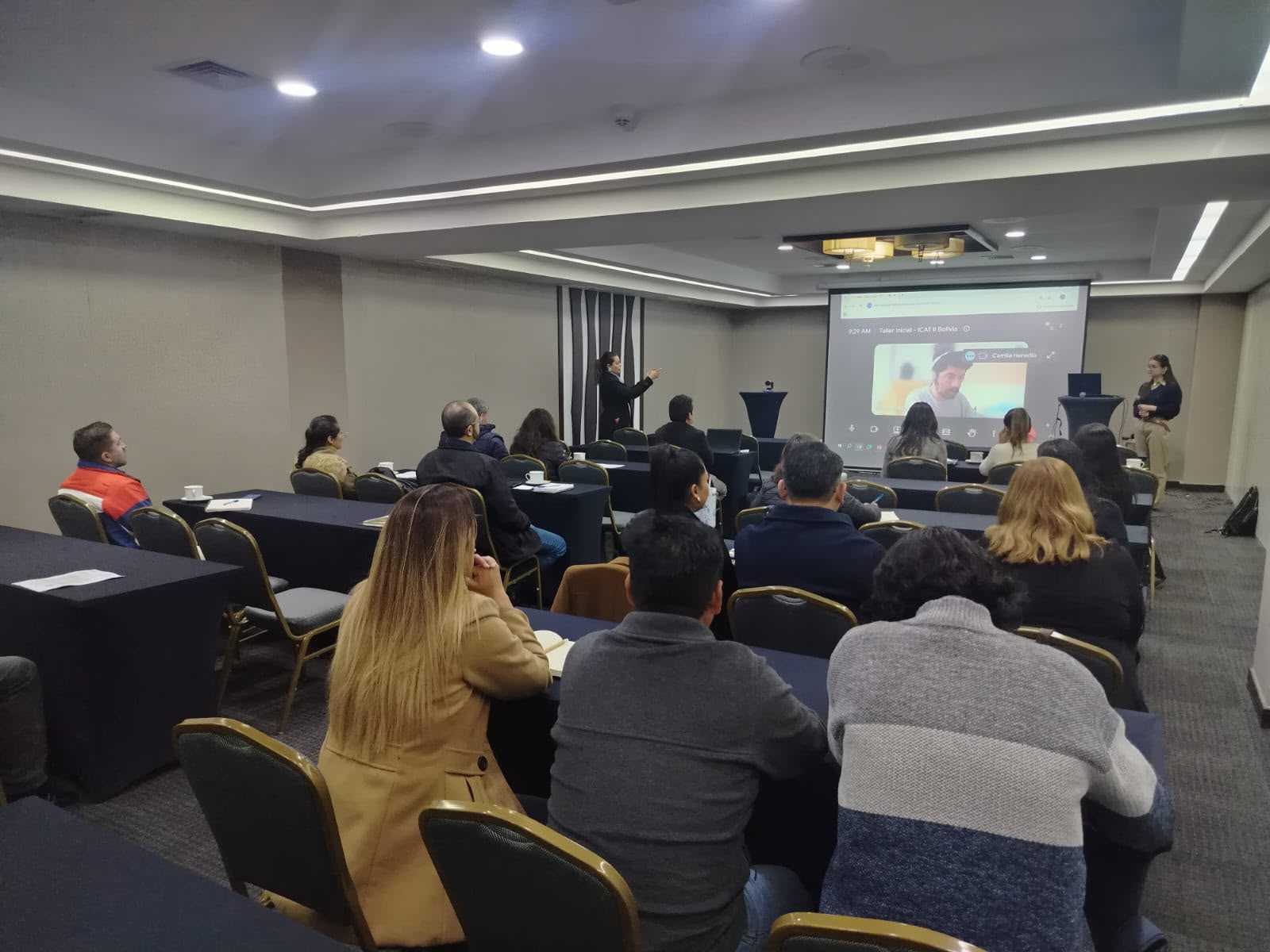
 Over the past few months, three national climate teams in Central and South America found themselves circling the same problem, even though they were working in different countries, on different timelines, with no coordination between them. In Tegucigalpa, Honduras’s climate change office opened a new project, funded by the Initiative for Climate Action Transparency (ICAT) and implemented by GHGMI’s consortium. In La Paz, Bolivia’s Plurinational Authority for Mother Earth picked back up a partnership that’s now two years in. In Guatemala City, the Ministry of Environment and Natural Resources brought its technical teams together to fold a new phase of work into an already underway Nationally Determined Contribution (NDC) update.
Each of these projects began with an inception workshop, the meeting where a national team and its partners lay out what the work ahead will actually involve. But what truly connects these three projects is a shared question, one that sits underneath almost every climate transparency effort a country takes on: How do you actually know whether a policy is doing what it was designed to do?
Honduras
Honduras submitted its first NDC in 2016 and updated it again in 2025, adding forestry and land use commitments alongside its existing targets for energy, agriculture, and waste. A year before that update, in 2024, the country had already laid the groundwork for a National Climate Change Monitoring System, known locally by its Spanish acronym SNMCC, meant to become the country’s central hub for climate data. Having that architecture in place is a real achievement, but it doesn’t answer the harder question of whether specific policies are working. That’s the piece Wendy Rodriguez, Honduras’s National Director of Climate Change, and her team set out to build when they opened the project’s inception workshop. The goal is a working module inside the SNMCC that can actually track whether the country’s energy and land-use policies are moving in the right direction.
Bolivia
Bolivia is approaching the same question from a different point in the process. The country’s project is now in its second phase, and the first phase left it with something to build on. Between 2022 and 2024, Bolivia’s Plurinational Authority for Mother Earth worked with GHGMI to build a tracking framework for the energy sector, complete with indicators, reporting formats, and a process for assessing policy impact. Phase two carries that same approach into forests and agriculture, as Bolivia works to track its recently updated NDC commitments through 2035. The sector has changed, but the tracking system, known as the SMTCC, already has some mileage on it.
Guatemala
Guatemala’s version of the question adds an extra layer: durability. The country’s monitoring system, SNICC, already has legal grounding in its national Climate Change Framework Law, and the Ministry of Environment and Natural Resources is currently updating its national climate action plan. Because of that timing, this phase of the project is not only about building out the technical side of the MRV framework. It also has to hold up on the institutional side, so the system and the people responsible for running it still function well after the update is filed, and the project has wrapped up.
Same Question, Three Different Vantage Points
None of these three countries is starting from nothing, and none of them is finished, either. Honduras is fitting new infrastructure into a system that’s barely a year old. Bolivia is carrying lessons from one sector into a new one. Guatemala is trying to build something durable enough to survive the end of the project that created it. Read side by side, what stands out isn’t that these countries are doing the same thing. It’s that they’re all treating a climate commitment as something that must be measured continuously, not something signed once and set aside.
That kind of work rarely makes headlines because it’s closer to the quiet, ongoing maintenance that keeps any large system functioning. But it’s also the part of climate transparency that determines whether a country’s commitments mean anything in practice. These three workshops were really just the start of that work, in three places, at three different stages of the same long process.
Comments