
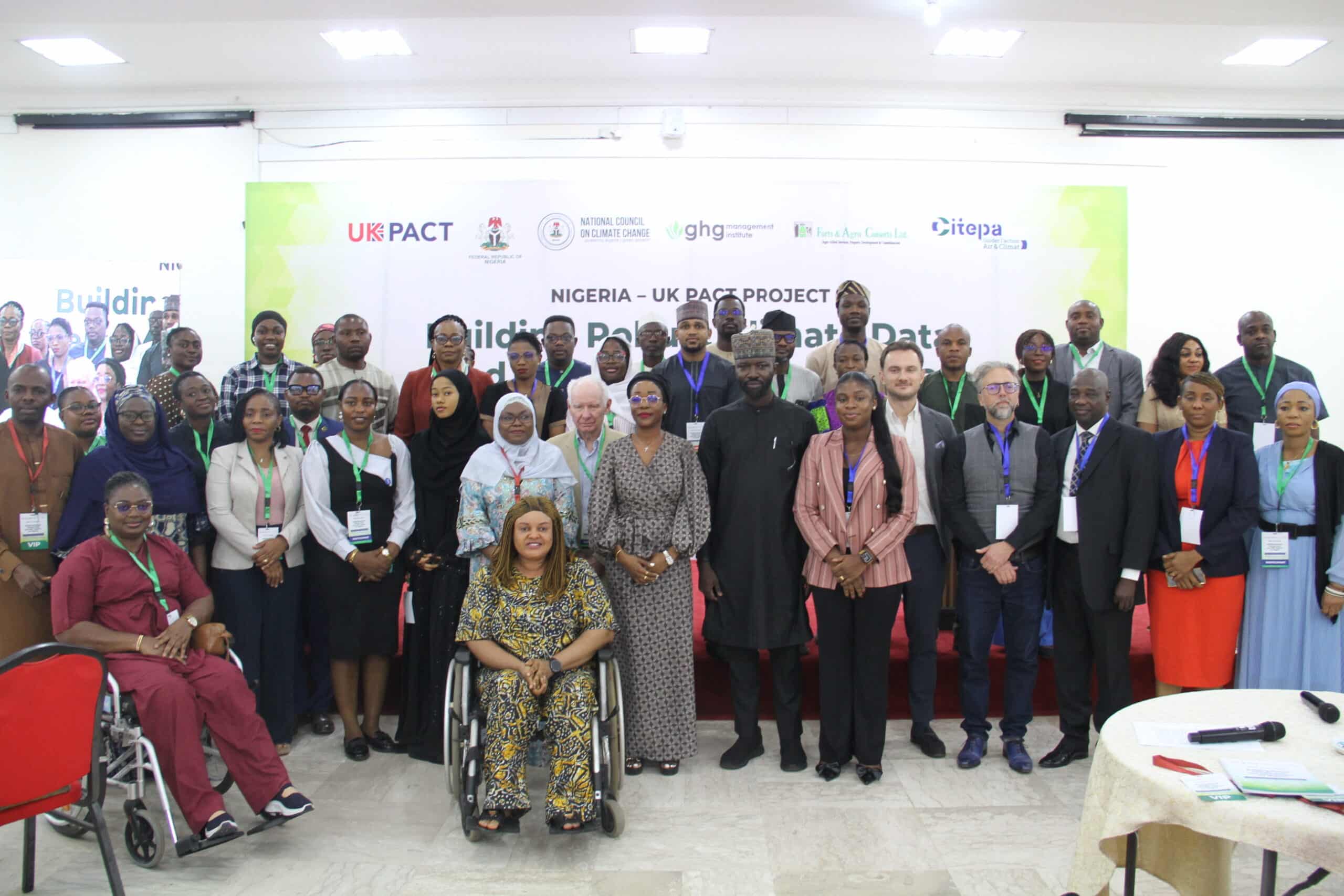
 At the inception workshop for the Nigeria-UK PACT (Partnering for Accelerated Climate Transitions) project in Abuja this February, Dr. Chinwe Oyegbula, a UK PACT senior expert, opened her session by acknowledging the range of emotions that tend to settle over a room the moment the topic of gender comes up on a slide. “I’m usually a bit wary when speaking about gender, especially in a heterogeneous space,” she told the group, “because most times, when we see gender appear on the presentation slide, I see people adjusting their ties, sitting upright.” She reassured the room they weren’t there for a debate. They were there to talk about how people view climate programs differently, and how that difference should shape the way measurement, reporting, and verification (MRV) systems collect data.
Though she opened with gender, that’s only part of the picture. Her session focused on gender equality, disability, and social inclusion (GEDSI), a broader commitment to ensure no one is left out of a data system, whether the gap would otherwise fall along lines of gender, disability, age, location, or something else entirely. “No one should be left behind when we’re collecting data,” she emphasized. “It shouldn’t be just among men, or just among women [for example]. We need to collect data on everyone, because the way people perceive the impacts of climate change differs.”
What MRV Measures and Why GEDSI Matters
This crowd was well-versed in MRV, but Dr. Oyegbula walked through its three parts in practical terms.
- Measurement is how data gets collected, whether through quantitative counts or qualitative accounts of what’s happening on the ground.
- Reporting is how that data gets summarized and shared across the stakeholders who rely on it.
- Verification is the check that follows, confirming the data is accurate and, often, accredited by an independent third party.
More importantly in this context, MRV has grown well beyond its original scope of counting greenhouse gas (GHG) emissions at the facility level. Modern systems are also expected to track adaptation outcomes and mitigation results, which means tracking what’s happening at the people level, not just at the installation level. A non-inclusive system that collects data only from one gender or group, or only at the project and facility level, produces skewed data before it even reaches analysis. The same is true when disability, age, or location get left out.
The fix is disaggregation. Within GEDSI, breaking data down by sex, age, location, and disability, and tracking who has access to adaptation and mitigation support and whose knowledge gets incorporated, sharpens the picture. It also aligns squarely with where national policy is heading. Nigeria’s newly submitted NDC 3.0 builds in a commitment to full inclusiveness across genders and disabilities, signaling to sub-national MRV systems that these are no longer secondary considerations.
What Happens Without GEDSI
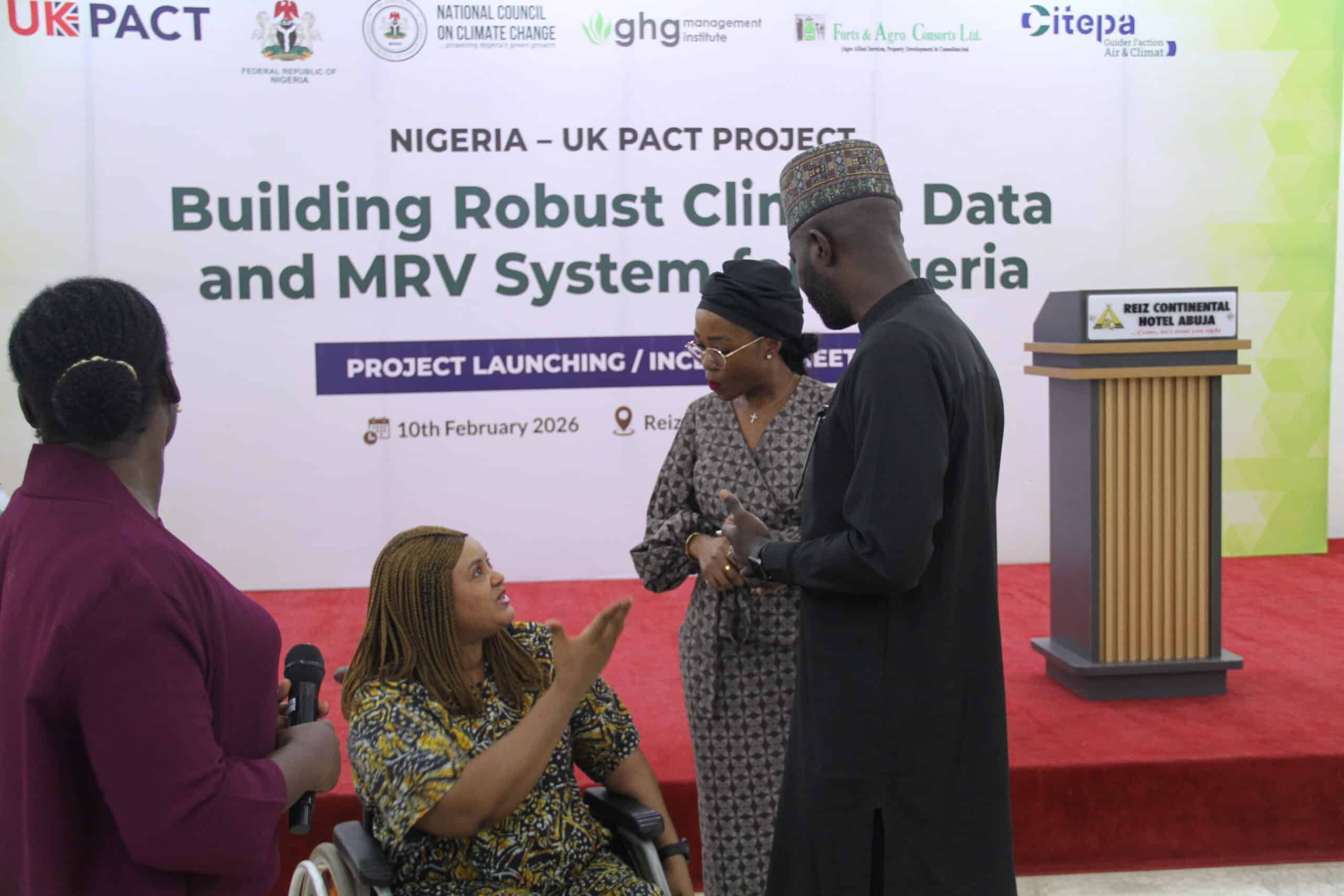 Dr. Oyegbula was direct about the cost of skipping this work. MRV systems that don’t integrate GEDSI tend to exclude certain groups from the benefits their own data is supposed to help distribute.
- Training and capacity-building opportunities end up unevenly shared.
- Gender stereotypes go unchallenged instead of being examined.
- Program performance assessments come out incomplete, weakening accountability and, over time, the trust that stakeholders place in the results.
A system built this way ends up measuring numbers while missing the people those numbers are supposed to represent, which runs against the basic principle that MRV work should do no harm to anyone it touches.
Where GEDSI Enters the System
The entry point Dr. Oyegbula shared offers a practical roadmap, not a list of ideals. Instead of just measuring overall results, a strong system looks at who those results actually help, which requires breaking down data by sex, age, location, and disability as a matter of routine. From there, the collection tools must be accessible, and the tracking process needs to be collaborative and inclusive of representative datasets. Ultimately, it’s about working directly with the people we are trying to support, instead of just observing them from afar, meaning “inclusion” may be the most important word in GEDSI.
A Design, Not an Add-on
For Nigeria’s sub-national governments currently building state-level MRV systems largely from the ground up, this is a design decision happening in real time. Whether disaggregation, inclusive data tools, and participatory monitoring get built into that architecture now, or bolted on later as a compliance exercise, will shape how accurately these systems reflect the country they’re meant to serve for years to come. That’s also the direction climate finance as a whole is moving. UK PACT requires a GEDSI action plan for every project it funds, tied to the UK’s wider International Climate Finance commitments and to the Organisation for Economic Co-operation and Development Development Assistance Committee (OECD DAC) gender and disability markers. Other major funders have built comparable expectations into their own programming.
As GHGMI Program Manager Alissa Benchimol, who led the GEDSI component of the project on GHGMI’s side, put it: “MRV systems are only as good as the picture they capture, and a system that ignores certain groups will always produce an incomplete story and be biased. GEDSI isn’t a secondary addition to MRV; it’s foundational to its accuracy. No matter who is running a project, the priority from day one must be ensuring our data tracking systems capture everyone and every circumstance, rather than leaving out vulnerable communities.”
Comments