
It all began with a drink in a Seattle cocktail bar. Tani Colbert-Sangree had already logged two GHGMI courses and built a name for himself in the world of carbon credits, but he’d only ever seen Michael Gillenwater, GHGMI’s Executive Director and Dean, in the course forums. It wasn’t until that night that they sat across a table from one another. Michael needed someone to help with a carbon credit research project, and Tani was on the job market, but would it be a good fit?
Somewhere between rounds, small talk gave way to shop talk: what makes a carbon credit trustworthy, where the field’s blind spots were, what Tani thought needed fixing, and why this work was worth doing. It didn’t take long for Michael to offer Tani a consulting contract, which eventually grew into a full-time role. And that role led to seven years spent building carbon credit work at GHGMI. Just a drink, a shared conviction that carbon accounting should be done right, and an era that followed.
“Tani has become a world-class GHG accounting and carbon credit markets expert and instructor—particularly on the difficult question of credit quality, most visibly through his work on the Carbon Offset Guide. He has always stayed anchored in a genuine commitment to environmental integrity. I’m proud of him and all he has done to further GHGMI’s mission. And while we’ll miss him, I know he will keep raising the bar for rigor and credibility in the electric power sector.” —Michael Gillenwater
Where it All Started
 Long before Seattle, there was Baltimore, where Tani grew up experiencing high school at a time when climate change was clearly becoming the challenge of his generation. In those school halls, his interest in climate action and justice was sparked, a passion he carried with him to Oberlin College, where Tani pursued Environmental Studies and Economics. But what really hooked him was the idea of carbon accounting and credits: that anyone, anywhere in the world could create a project that could help mitigate climate change. That it wasn’t just “governments and powerful corporations needed to change,” Tani mentioned. That all of us could make a meaningful difference through changes or projects within our schools, workplaces, and communities, and that this was incentivized to occur globally.
Additionally, Tani saw early on that this wasn’t just a technical problem of ensuring those projects did what they claimed to. It was an environmental justice problem, too: whose emissions count, whose land gets protected, who ends up paying the costs of climate change. That instinct didn’t stay theoretical for long. As an undergraduate student senator, Tani led a student referendum to fund the purchase of carbon credits equivalent to the emissions from student travel to and from campus, proof that he’d rather build something than just study it.
“The Carbon Management Fund at Oberlin College was a tangible success for my fellow organizers and me,” Tani explained. “The goal was to empower students to engage in research that would support the sourcing of carbon credit projects and to develop projects in the area surrounding Oberlin.”
Looking back through the years after his graduation, Tani confirms, with a smile, that this passion project in college and his early-career pursuits all started the quiet unweaving of an invisible string that unexpectedly prepared him for that cocktail with Michael in Seattle.
After Oberlin, Tani ran his own consulting practice, Tomorrow’s Climate Solutions, followed by co-leading the Duke University Carbon Offsets Initiative from 2017 to 2019. In between, he founded the Offset Network in 2016, a peer-review system that lets universities intertwine carbon-neutrality work directly into their curriculum and research. By 2015, he’d already picked up a GHGMI certificate in GHG Verification for Inventories and Projects. So when he sat down across from Michael, GHGMI was a name he’d been circling for years.
Seven Years Of Carbon Credit Work
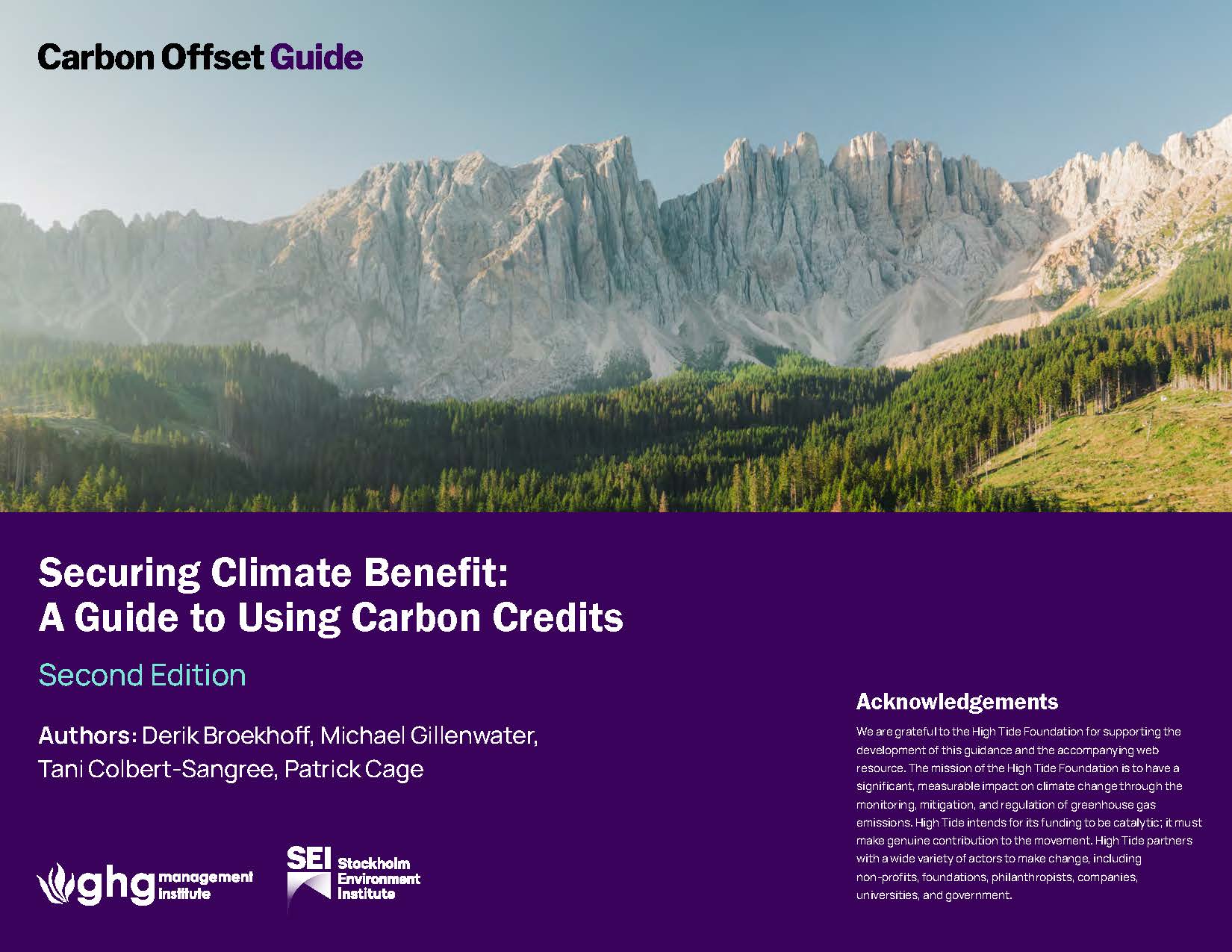 Tani officially joined GHGMI in the summer of 2019 as a Project Coordinator, and carbon credits ran through nearly everything he touched thereafter. He was a lead contributor to the Carbon Offset Guide, GHGMI’s partnership with the Stockholm Environment Institute, which has since become a trusted public resource for the field to better understand carbon credits and how to utilize them responsibly. His contributions also extend to the carbon credit rating work of the Carbon Credit Quality Initiative and Calyx Global, and today he sits on the Integrity Council for the Voluntary Carbon Market’s (ICVCM) Expert Panel.
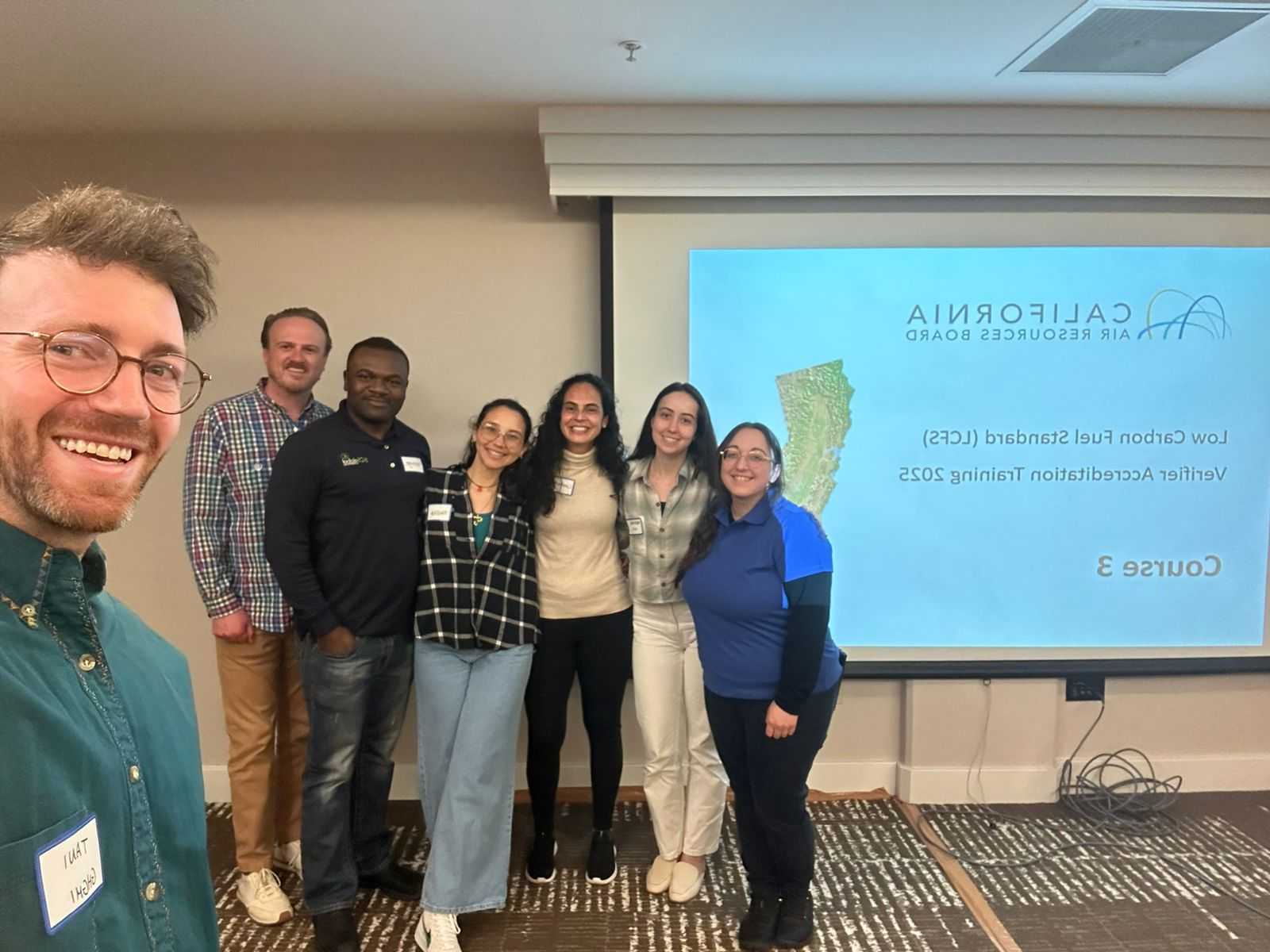
Tani also expanded upon GHGMI’s working partnership with the Electric Power Research Institute (EPRI). Over the years, he co-authored one technical paper after another on GHG accounting for electric companies and combined utilities, tackling everything from battery energy storage systems to transmission and distribution accounting to the nuances of Scope 3 accounting. Tani also developed training to accredit verifiers under CARB’s Compliance Offset Program, and, alongside colleague Erika Barnett, co-led the development and delivery of CARB’s LCFS Verifier Accreditation Training, helping build out the next generation of accredited verifiers for California’s Low Carbon Fuel Standard.
“Tani and I go back about seven years, having started at GHGMI around the same time,” Erika describes, lost in memory. “I learned quickly that Tani is a very thoughtful person; a quality that I seriously admire. And this project was no different. Tani led it with his usual authenticity, dedication to meaningful instruction, and warmth.”
That’s the gift of learning from Tani—and working with him. “The participants were always front of mind for him as he considered what would actually help them, not just what was easiest to deliver,” Erika continues. “They left the training with a clearer grasp of the LCFS, and with a sense of being welcomed into the broader GHG management community.”
Unafraid of Unchartered Territory
 Another one of those EPRI projects, navigating how to actually do Scope 3 accounting, had no map to follow. Between 2023 and 2024, Tani led GHGMI’s side of the EPRI-funded effort to help electric companies and combined utilities get a handle on scope 3 emissions, the hardest-to-pin-down scope in corporate GHG accounting, covering everything in a company’s value chain that isn’t a direct or purchased energy-related emission [1]. He’s said it felt like “uncharted territory,” given the lack of guidance that existed—and the lack of clarity to the guidance that did exist.
There was no guarantee anyone would actually adopt the guidance he was drafting, only a conviction that utilities needed a workable answer grounded in GHG accounting principles if they chose to attempt to expand their Scope 3 accounting efforts. Tani knew it was worth laying and improving the foundation.
“An excellent climate advocate and steady presence to those around him, Tani’s determination to do something actually meaningful in this world is clear, and has no doubt created ripples of change throughout this space,” Erika added.
Passing on the Knowledge
But ask Tani what he’s most proud of, and the answer isn’t a paper or a protocol. It’s the learners he taught in the classroom. He started out teaching GHGMI’s Course 202, Basics of Project-Level Carbon Accounting, and later added the 300-level courses and tailored training workshops. Teaching gave him something the policy work couldn’t always offer: proof, in real time, that his work was landing. He could watch a concept click for someone and know that understanding would travel with them long after the course ended.
“Teaching is one of the primary ways that GHGMI’s capacity building approach to climate impact gets carried out and causes ripples, Tani expressed. “It was one of the most rewarding experiences of my time at GHGMI to work with learners and provide audiences with learning opportunities. The presentation skills, course development pedagogy, and educational perspective that I gained at GHGMI will benefit me in all my future endeavors.”
One other accomplishment stands above the rest for its impact. In Washington State, as a member of the state-led working group considering adoption of the California Forest Protocol to the state’s Cap-and-Invest program, Tani fought to bolster the protocol’s environmental integrity weak points, make it harder to game, and make it more resistant to bias, and he won. That story deserves its own telling, and we’ve written it here: https://ghginstitute.org/2026/07/20/washington-cap-and-invest-forest-protocol-appraisal-rigor/
What’s Next for Tani
Tani is packing up his seven years at GHGMI and bringing them to a place he knows well: EPRI. It’s less a departure than a continuation: the same questions of GHG accounting and electric sector emissions that shaped his last seven years will still be waiting for him on day one.
Seven years is a long stretch to spend teaching, writing, and pushing an entire field toward higher standards, and Tani spent every bit of it that way. His fingerprints are on the courses hundreds of professionals have taken, on the guide thousands more turn to for understanding carbon credits, and on a piece of state policy that will shape forest carbon projects for years to come. That’s not a small legacy. We’re grateful for all of it, and glad this isn’t so much a goodbye as a see-you-around.

Sources:
1. Greenhouse Gas Management Institute, “Scope 3 GHG Accounting for Electric Companies and Combined Utilities: A Compendium of Technical Briefs”: https://ghginstitute.org/2024/07/03/scope-3-ghg-accounting-for-electric-companies-and-combined-utilities-a-compendium-of-technical-briefs/
Comments