
 The first time you do something, it’s a learning process. Mistakes are expected and are often seen as a valuable part of the process. They allow you to regroup, rethink, and redo. But then comes doing the same thing a second time. Expectations shift. You’ve seen the process, you’ve had feedback, and now the goal is to build on what you learned and do it better.
That’s where many countries find themselves with their Biennial Transparency Reports (BTRs). Under the Paris Agreement’s Enhanced Transparency Framework (ETF), the first round of BTRs was a milestone in and of itself. With second BTRs (due by the end of 2026), the question has moved on from “Can we submit?” to “How do we make this report stronger, clearer, and easier to trust?”
And in Central Asia, five countries are working on that question together.
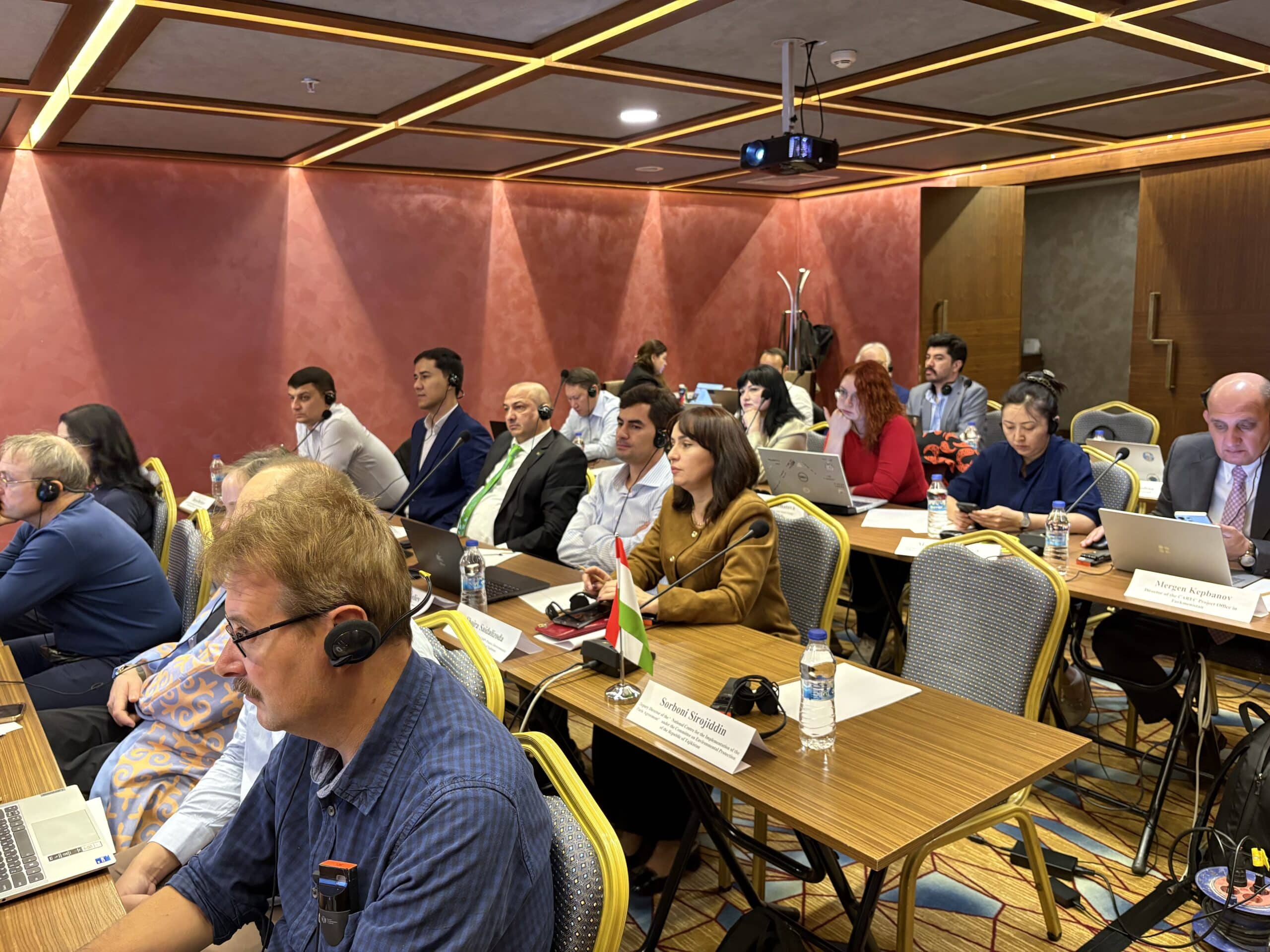
For four days in late September 2026, technical experts from Kazakhstan, Kyrgyzstan, Tajikistan, Turkmenistan, and Uzbekistan met in Istanbul for the BTR Solution Arena. The regional workshop was organized by the Regional Climate Action Transparency Hub for Central Asia (ReCATH), hosted by the Regional Environmental Centre for Central Asia (CAREC), with GHGMI as the technical implementing partner and funding from the Initiative for Climate Action Transparency (ICAT). GHGMI’s Matej Gasperic, Olga Lyandres, Richard Martínez, Walter Oyhantcabal, and Alissa Benchimol led the sessions in Istanbul alongside UNFCCC and CAREC colleagues.
Why a regional hub changes the conversation
We’ve said it before because we’ve heard it time and time again from the countries we work with: Climate transparency can feel like a siloed job. But the challenges behind those reports often aren’t unique to one country, which is why regional collaboration is so important.
Many countries may experience similar challenges when it comes to preparing their reports, but for countries in Central Asia, which also share historical and cultural ties and have a common language, they can communicate and solve those issues more easily together while also learning from each other’s experiences, successes, and challenges. The BTR Solution Arena provided a forum for addressing some of these issues at a regional scale, for example, working through how to align national statistics to IPCC categories for a proper energy balance, disaggregating livestock data, and representing land use consistently over time. When five countries work on a shared problem in the same room, a fix one team finds can help the other four.
 “That’s ultimately the idea behind ReCATH and why it started in the first place,” Matej Gasperic, GHGMI’s Senior Director of Mitigation, noted. “The hub gives Central Asian countries a regional structure for building transparency capacity, so the region grows its network of experts who can further support each other. The BTR Solution Arena is its latest activity.”
Five countries, five starting points
The five countries arrived at different stages. Kazakhstan had drafted every chapter of its report and was getting ready to circulate it for comments. Kyrgyzstan was preparing a combined second BTR and Fifth National Communication. Tajikistan was collecting data and drafting sections, and Uzbekistan was finalizing its inventory calculations. Some teams had already completed technical expert review, while others were still preparing for it.
To make sure the sessions addressed real needs, GHGMI assessed the BTR materials countries had shared before the workshop. The team checked them against the ETF’s modalities, procedures, and guidelines (MPGs) and the IPCC inventory guidelines, and drew on findings from the region’s completed technical expert review reports. Because the agenda focused on patterns that came up across several countries, every session was relevant to more than one team in the room.
The problems that are easiest to prevent
One session covered documentation, a part of BTR preparation that’s easy to fix. Using patterns drawn from the region’s own review reports, participants looked at three common issues: notation keys used incorrectly (especially “NE” for not estimated and “IE” for included elsewhere), assumptions that never got written down, and figures in the report that don’t match the Common Reporting Tables. For each one, the group reviewed what it looks like, why it happens, and how to stop it before it reaches a reviewer.
This is essential because clear documentation ensures reviewers, colleagues, and future inventory teams understand the work and can build on it. It’s part of upholding the transparency principles of GHG accounting under the ETF.
From there, the sessions went deeper into the technical work:
- Filling data gaps responsibly with proxy data and expert judgment
- Recalculations, flexibility provisions, and quality assurance and quality control (QA/QC)
- Tracking progress toward NDC targets, including indicators, policies and measures, and emissions projections
- Hands-on practice with the UNFCCC’s ETF reporting tool, led by UNFCCC staff
- Sector deep dives on energy and industrial processes, agriculture, land use, and waste
“Some of the most valuable insights came from peers who have already been through the process,” commented GHGMI’s GHG and MRV Systems Project Manager, Alissa Benchimol, underscoring the advantage of working regionally.
 In a country spotlight panel, Kazakhstan and the host country, Türkiye, described how they prepare their reports and what changed after review.
“Hearing it from a neighbor makes the process feel more achievable—more relatable, even—than hearing it from an outside expert,” Alissa added.
Of course, side conversations over coffee breaks and lunches further the connections and exchange of information and experience.
“Those informal exchanges between experts with similar jobs and similar data challenges are part of what a regional hub is built to support,” observed Olga Lyandres, a Senior Project Manager at GHGMI.
What comes next
The workshop closed with each country identifying its priorities for improving its BTR and naming the support it still needs. Those findings will also help ReCATH plan future regional support. And it’s important to note that a second BTR isn’t exactly the finish line. Each reporting cycle builds on the last through better data, clearer documentation, and stronger institutions to sustain the work.
“In Central Asia, those institutions now include a regional network of people who know each other, understand each other’s challenges, and can pick up the phone when they get stuck,” Olga concluded.
That network may be the most lasting result of all.
Comments